Old or faulty wiring doesn’t just mess with your appliances. It can put your entire home at risk. Across the UK, a surprising number of homes still rely on electrical systems that were installed decades ago and have never been upgraded.
Flickering lights, warm sockets, and fuse boxes that look like they belong in a museum aren’t just annoying, they’re red flags.
These signs usually mean your system is under pressure and might not be safe anymore.
Mayberry Electrical helps homeowners spot these issues early and sort them out before they turn into something serious.


1. Why do my lights flicker or dim on their own?
If your lights flicker for no obvious reason, no storm, no power cut, nothing else going on, that’s a sign you shouldn’t ignore. It might seem like a small annoyance, but in many cases, it points to a deeper electrical issue. One of the most common causes is your wiring struggling to carry the load your household now demands.
For example, if the lights dim every time you boil the kettle or run the washing machine, chances are your circuits are either overloaded or the wiring has started to break down.
Homes across Southern UK, especially those built before the 1970s, often still have their original wiring or lighting circuits that haven’t been updated. Back then, the average home didn’t need to support dozens of plugged-in appliances, chargers, smart devices, and electric heaters all at once. Today, that same setup simply can’t cope.
The Institution of Engineering and Technology (IET) has highlighted that increased reliance on high-power devices makes it more important than ever to ensure your wiring meets current standards.
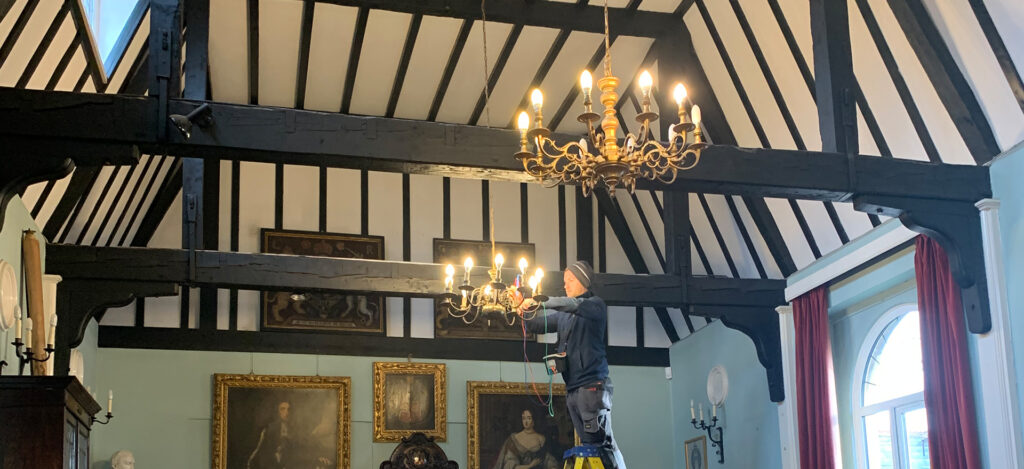
Mayberry Electrical handled countless callouts where flickering lights were the first clue that something wasn’t right. From Salisbury to country homes in the New forrest, the pattern is usually the same.
The more you upgrade your home, the harder it becomes for old wiring to keep up. A proper rewire not only sorts out the flickering but gives you confidence that your lighting is reliable and safe for years to come.
2. Are burning smells or buzzing sounds from sockets dangerous?
Yes, they are very serious warning signs. If you’ve ever caught a faint burning smell near a plug, switch, or socket, there’s a good chance the insulation around the internal wires is breaking down.
This can happen slowly over time, especially in older homes where the wiring hasn’t been updated. Buzzing, crackling, or humming sounds from outlets or behind the wall are just as worrying.
These usually mean there’s a loose or damaged connection, which could easily lead to overheating. Faulty wiring and appliances account for nearly half of all accidental electrical fires.
That stat alone makes it clear how important it is to act quickly when you notice these signs. We always tell our clients to switch off the power at the consumer unit and get in touch with us immediately if they smell burning or hear odd noises.
It might turn out to be a small repair, but it could also be a sign that the wiring in your home is no longer safe. Mayberry Electricals team is trained to carry out full safety inspections and identify the cause of the problem right away.

3. What does an outdated fuse box look like?
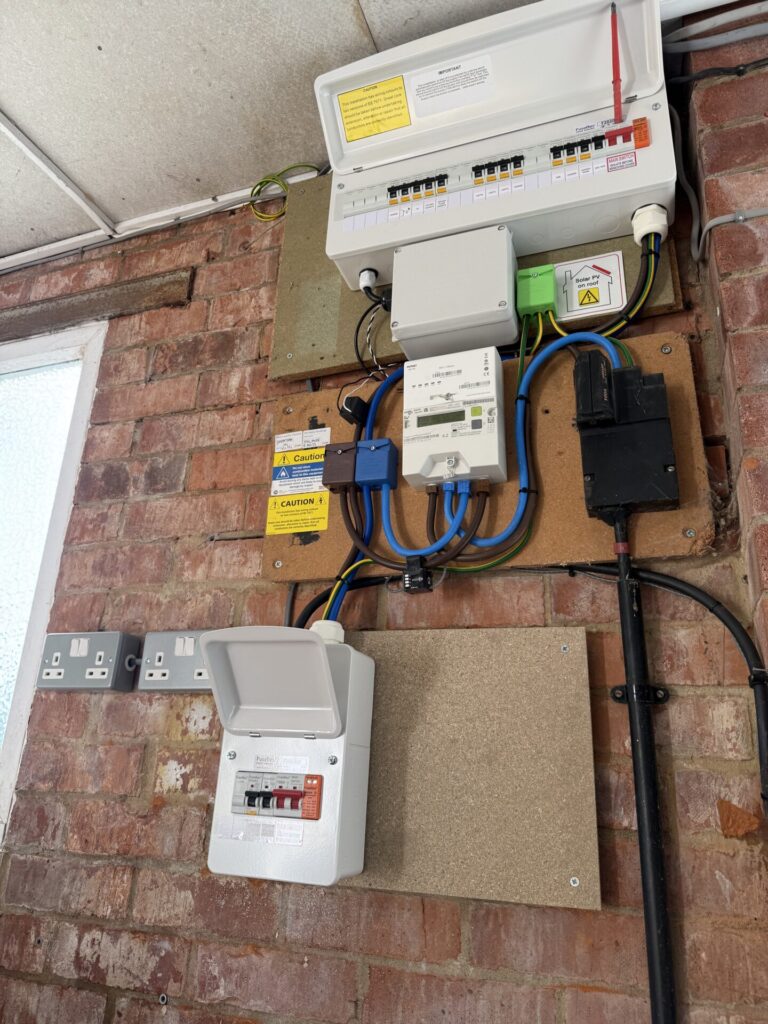
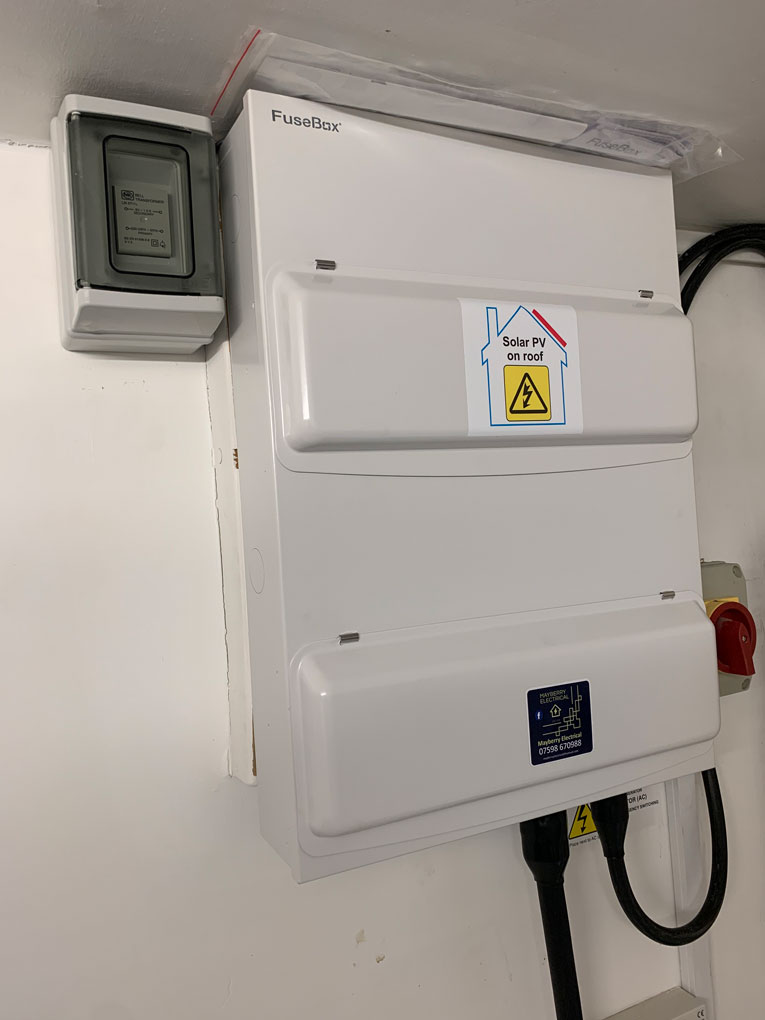
One of the most obvious signs your home needs rewiring is the fuse box. If it’s the old-style unit with ceramic fuses or no RCD protection (residual current device), it’s time for an upgrade. Today’s modern consumer units come with built-in protection to automatically cut off power if something goes wrong.
We often meet homeowners across Wiltshire & Hampshire who didn’t realise how out-of-date their units were.
If your fuse box hasn’t been touched in decades or you don’t have enough capacity for new appliances, we recommend an inspection.
Rewiring your home usually goes hand in hand with upgrading to a new consumer unit, and we can handle both.
4. Should I be worried about black cabling and fabric-covered wires?
Yes, absolutely.
If your home still has black rubber cables or fabric-covered wires, it’s time to get them checked.
These types of cables were common in properties built before the 1960s, but they are now considered outdated and unsafe.
Black rubber insulation becomes brittle with age, which means it can crack and expose live wires.
Fabric-covered wiring, often found in even older homes, offers very little protection and doesn’t meet modern safety standards.
According to guidance from the Institution of Engineering and Technology (IET), these older materials are no longer acceptable in domestic installations.
Over time, the risk of electric shocks, short circuits, and even fires increases significantly if these cables are still in use.

5. How often should a house be rewired in the UK?
The general guideline in the UK is to rewire your home every 25 to 30 years, but it’s not always that straightforward.
A lot depends on how well the original installation was done and how much your household has changed since then.
For example, if your home was rewired back in the 1990s and you’ve since added electric showers, multiple televisions, underfloor heating, or smart lighting systems, the original wiring might be working overtime just to keep up.
These additions place a higher demand on your electrical system. Overloaded circuits can lead to overheating, flickering lights, and even blown fuses.
Increasing energy use in modern homes is putting pressure on older systems that were never designed for this level of usage.
It’s not just about how old the wiring is, it’s about whether it can safely handle what you’re using it for today.
Top 5 Signs You Need to Rewire Your Home
If you’re unsure when your home was last rewired, the best place to start is by booking a proper electrical inspection. This isn’t just a quick glance at your fuse box.
We check everything that matters, your consumer unit, sockets, switches, wiring routes, and the overall condition of the installation.
An inspection helps us understand whether your system still meets current regulations or if it’s starting to show signs of wear. Some homes only need a partial rewire. For example, if you’re just renovating your kitchen, converting the loft, or adding an extension, we can often isolate the work to that specific area.
Partial rewiring is more affordable and less disruptive, and it can still make a big difference in safety and function. However, homes that haven’t seen electrical upgrades in decades often require a full rewire.
This is especially true for properties that still have old-style wiring materials, a lack of RCD protection, or not enough sockets for today’s lifestyle. A full rewire brings everything up to current standards and gives you a safer, more reliable setup.
According to the UK Government’s Building Regulations and guidance from the Institution of Engineering and Technology (IET), full rewiring may be necessary if the existing installation falls short of safety expectations or if you are making major alterations to your home.
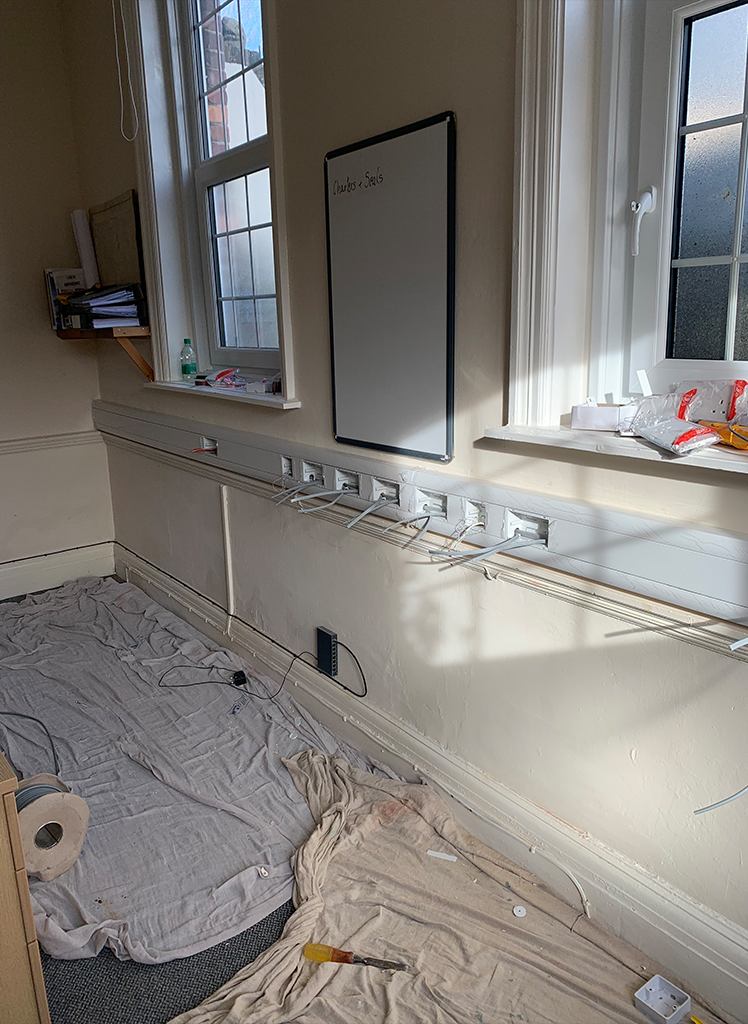
Rewiring your home might sound like a major project, but when handled professionally, it can be straightforward and well organised. The process always begins with a full electrical inspection.
We check the condition of your current wiring, test each circuit, and assess whether it meets today’s safety standards. We also look at how your home is being used, how many appliances you run, where the busiest rooms are, and whether you plan on adding things like smart lighting, outdoor power, or an electric vehicle charger in the future.
Although rewiring involves lifting floorboards and chasing cables into walls, we do everything we can to keep disruption to a minimum.
We protect your furniture, clean up at the end of each day, and work efficiently to stay on schedule. Some clients choose to stay at home while we work, and others take the chance to go away for a few days. Either option works, we are happy to plan around what suits you best.
Mayberry Electrical finishes every rewire with a proper handover. That includes an electrical installation certificate to confirm the work meets current standards, along with clear guidance on how your new system works.
If you ever have questions after the job is done, we’re always just a call away.
Mayberry Electrical is a local, friendly, and experienced team that understands the unique needs of homes across the south of the UK. If your house was built in the 1940s or just a few years ago, we can help bring your electrical system up to standard.
We handle full and partial rewires, install modern fuse boxes, and set up smart home systems tailored to your lifestyle. Our services also include thorough electrical inspections and official safety certificates, so you can be sure everything meets current UK regulations.
Clients trust us because we offer honest, upfront pricing, work cleanly and respectfully, and avoid technical jargon or sales pressure. We keep things straightforward, safe, and built to last.
If your wiring is more than 25 years old, your fuse box still looks like something from another era, or you’ve noticed burning smells, flickering lights, or buzzing sockets, it’s worth speaking with a professional. Rewiring might seem like a big decision, but it’s one of the most important things you can do to protect your home and your family.
Mayberry Electrical makes it easy. We take care of the entire process without the stress, mess, or confusion. If you’re ready for a full rewire, need a few upgrades, or just want to make sure your wiring is still safe, we’re here to help.
Let’s get your home sorted, safely and professionally.